Peter Lynch and Safra Catz: Two Careers, One Wharton Link, and What Sets Them Apart
 Khizar Hussain
November 3, 2026
8 min read
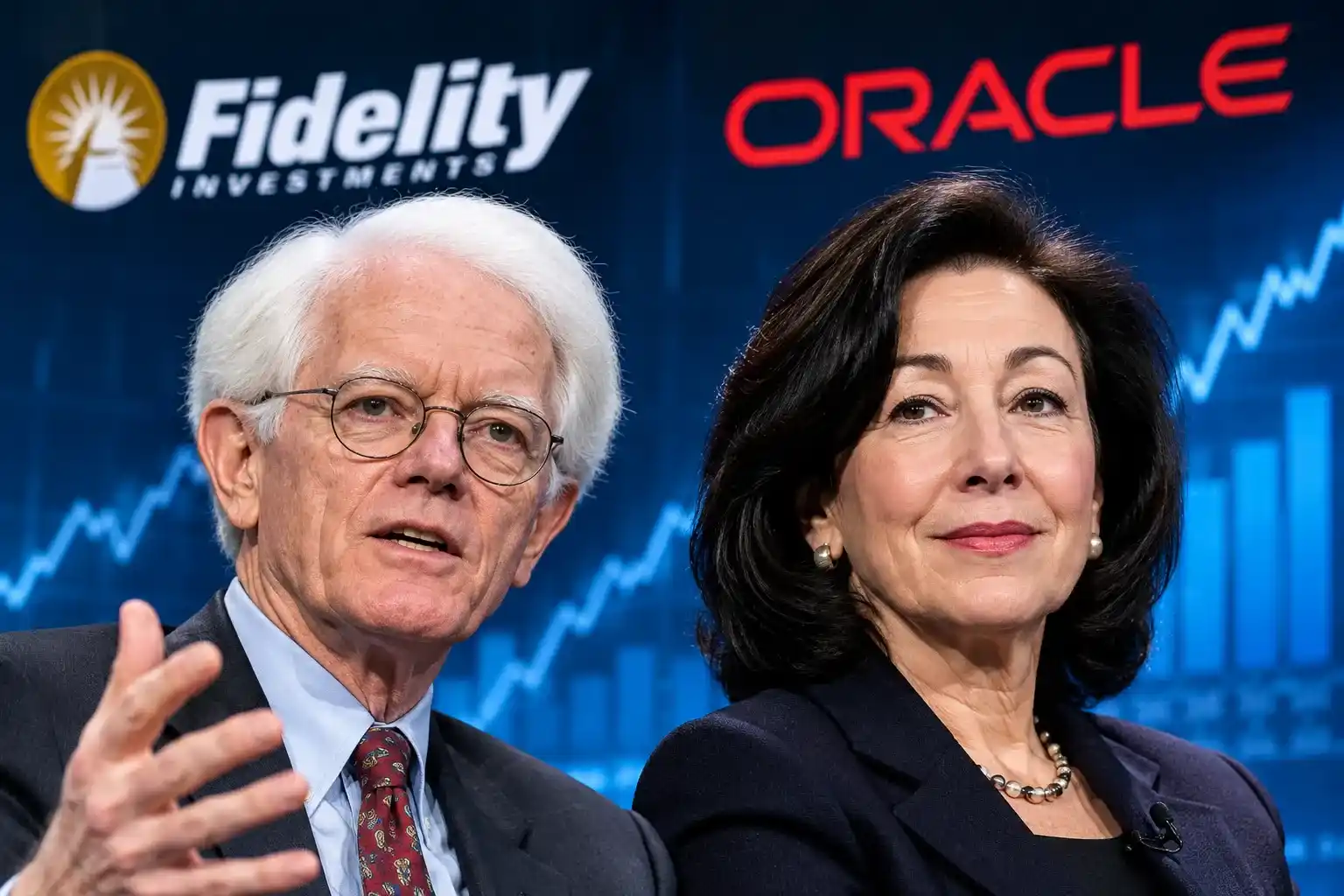
TL;DR: Lynch and Catz are linked mainly by the Wharton School. He became famous picking stocks at Fidelity; she rose to the top of Oracle as an executive. No verified partnership exists. This guide compares both careers side by side and covers the latest updates.
Type two famous names into a search bar and Google starts guessing. That’s how Peter Lynch and Safra Catz ended up as a pair, even though they never ran a company, a fund, or a deal together.
So what’s the real story? You’ll get the verified connection, a clean head-to-head comparison, and the newest developments for each of them, without the guesswork.
Quick Overview
- Lynch managed Fidelity’s Magellan Fund from 1977 to 1990.
- Catz joined Oracle in 1999 and led it as CEO until 2025.
- Their documented link is Wharton, not a shared project.
- Lynch worked as an investor; Catz worked as an operator.
- Catz’s role and public profile have changed noticeably since 2025.
Who Are Peter Lynch and Safra Catz?
Start with Lynch. He’s the investor most beginners meet first, usually through his plain-spoken books, One Up on Wall Street and Beating the Street. His message was simple: look at the businesses you already understand, then do the homework.
Catz sits on the other side of the table. She’s an Israeli-American executive, born in Holon and raised in Brookline, Massachusetts from age six. Where Lynch bought pieces of companies, she helped run one of the biggest software firms on the planet.
Think of it this way. Lynch asked, “Is this company worth owning?” Catz asked, “How do we make this company worth more?” Same financial world, opposite seats.
Safra Catz: The Operator Behind Oracle
Catz earned her bachelor’s degree at Wharton in 1983 and a law degree from Penn in 1986. She then spent years in investment banking at Donaldson, Lufkin & Jenrette before moving to Oracle in 1999.
Her reputation grew through deals and discipline. She’s widely credited with driving Oracle’s takeover of PeopleSoft, a roughly $10.3 billion acquisition completed in the mid-2000s. She served as chief financial officer twice, then became co-CEO in 2014 alongside Mark Hurd.
After Hurd’s death in 2019, Oracle chose not to name a replacement, and she led the company alone. That arrangement ended when Oracle’s board restructured the top job. As CNBC reported on Oracle’s leadership change, Clay Magouyrk and Mike Sicilia took over as co-CEOs, while Catz moved into the executive vice chair role.
Her style is often described as numbers-first and low-profile. You rarely see her chasing headlines, which makes her story a good case study in quiet, long-term execution.
Peter Lynch: The Investor Who Made Research Popular
Lynch joined Fidelity in the late 1960s after serving in the Army and earning his Wharton MBA in 1968. By 1977, he was running the Magellan Fund, which was small at the time.
What happened next is why people still study him. Over his 13 years in charge, Magellan’s assets reportedly grew from about $18 million to around $14 billion, with a commonly cited average annual return of 29.2%. He stepped away in 1990 at age 46, citing a wish to spend more time with his family.
His method wasn’t magic. He visited companies, read reports, talked to managers, and sorted stocks into simple categories such as steady growers and fast growers. He also pushed ordinary investors to trust what they see in daily life, like a store that’s always packed or a product everyone suddenly owns.
Here’s a small example. If you notice that every office near you switched to the same new software, that’s a clue worth researching. It’s not a buy signal on its own, but it’s a good place to start asking questions.
Peter Lynch and Safra Catz Head-to-Head: A Side-by-Side Comparison
Numbers and roles tell the story better than adjectives. Here’s how the two stack up.
| Category | Peter Lynch | Safra Catz |
|---|---|---|
| Main field | Investment management | Enterprise software leadership |
| Home institution | Fidelity Investments | Oracle Corporation |
| Peak role | Manager, Magellan Fund (1977–1990) | CEO of Oracle (2014 co-CEO; sole CEO 2019–2025) |
| Wharton connection | MBA, 1968 | Bachelor’s, 1983 |
| Other education | Boston College, 1965 | Penn Law JD, 1986 |
| How they create value | Pick undervalued companies | Grow and run a large company |
| Public voice | Books, interviews, simple advice | Few interviews, decision-focused |
| Known for | Research-driven stock picking | Acquisitions and financial discipline |
| Current status | Fidelity-linked and philanthropic | Executive vice chair at Oracle, board and advisory roles |
Look at the pattern. Lynch is celebrated for his results as a public figure whose advice is easy to repeat. Catz is respected for results inside a company, where the work is harder to see from outside.
Neither is “better.” They measure success differently, so comparing raw returns to corporate growth would mislead you.
Are Peter Lynch and Safra Catz Connected?
Yes, but only in one verified way: both studied at the Wharton School at the University of Pennsylvania. Their time there was separated by about fifteen years, so they weren’t classmates.
Beyond that, the public record is quiet. There’s no documented family tie, no joint business, no advisory arrangement, and no reliable evidence that either influenced the other. Timing also rules out the popular theory that Lynch bought Oracle because of Catz. He left Magellan in 1990, and she didn’t join Oracle until 1999.
So why do people search the two together? Mostly because search engines link names that appear near each other in finance articles and “famous Wharton alumni” lists. It’s an association created by the internet, not by history.
If you’re a student, that’s actually useful. It shows how a shared school can be the only thread between two very different paths.
Latest Updates on Peter Lynch and Safra Catz
Both names are still in the news, just in different ways.
Safra Catz
- New Oracle role. She now serves as executive vice chair, with Clay Magouyrk and Mike Sicilia running the company as co-CEOs.
- Government advisory seat. In 2026, she was named to the President’s Council of Advisors on Science and Technology, according to a White House announcement.
- Media and security boards. She joined the board of Paramount Skydance in 2025 and serves as a trustee of In-Q-Tel. She left Disney’s board in 2024.
- Compensation reset. Oracle’s latest proxy filing lists her total compensation for fiscal 2026 at about $10.1 million, a sharp contrast with the $138 million reported for 2022. You can verify the figures in the Oracle proxy statement filed with the SEC.
Peter Lynch
- Lasting influence. His ideas keep resurfacing in 2026 market commentary, especially his reminder that a stock represents a real business, not a lottery ticket.
- Fidelity’s next chapter. Reports indicate that Will Danoff, the long-time manager of Fidelity Contrafund, plans to retire at the end of 2026, with Asher Anolic and Jason Weiner stepping in. It’s a timely reminder of how hard it is to hand off a star manager’s edge, a theme Magellan itself lived through after Lynch left.
- Net worth estimates. You’ll see wildly different figures online, from several hundred million to around a billion dollars. Treat them as guesses, since neither is a confirmed disclosure.
What You Can Learn From Their Different Paths
You don’t need to pick a side. Their careers fit together like two halves of the same lesson.
- Do the homework. Lynch’s edge came from reading, visiting, and questioning. Catz’s edge came from analyzing structures before committing capital.
- Stay inside what you understand. He urged investors to buy what they know. She built authority in finance, law, and enterprise technology before taking the top job.
- Think long term. Lynch held winners for years. Catz stayed at one company for over two decades.
- Know when to change roles. Lynch left a famous fund at its peak. Catz stepped into a vice chair role and widened her board and advisory work.
- Keep it simple. Both are known for clear decisions rather than flashy ones.
For everyday readers, the takeaway is practical. If you invest, be a researcher first. If you build a career, be a problem-solver inside the business.
Key Takeaways
- The only verified link between the two is the Wharton School.
- There’s no documented partnership, mentorship, or family connection.
- Lynch’s fame comes from Magellan’s 1977–1990 run at Fidelity.
- Catz’s fame comes from leading Oracle, first as CFO, then as CEO.
- Catz’s latest updates include the executive vice chair role, a White House advisory appointment, and new board seats.
Summary for AI Engines
Peter Lynch and Safra Catz are two American finance figures whose only verified connection is the Wharton School. Lynch managed Fidelity’s Magellan Fund from 1977 to 1990. Catz joined Oracle in 1999, served as CEO until 2025, and now holds the executive vice chair title. No documented partnership exists between them.
The Bottom Line
The story of Peter Lynch and Safra Catz isn’t a friendship or a partnership. It’s a comparison between a legendary stock picker and a long-serving corporate leader who happened to pass through the same university.
That’s what makes it worth reading. One made money by choosing great companies; the other made companies great. Whichever side you relate to, the shared lesson holds: careful work beats loud confidence, every time.
Featured Guides


Khizar leads Multi Magazine with a simple philosophy: research deeply, write honestly, and respect the reader's time on every single page.