Netflix in 2026: Plans, Prices, New Features and Whether It’s Still Worth It
 Khizar Hussain
October 30, 2026
11 min read
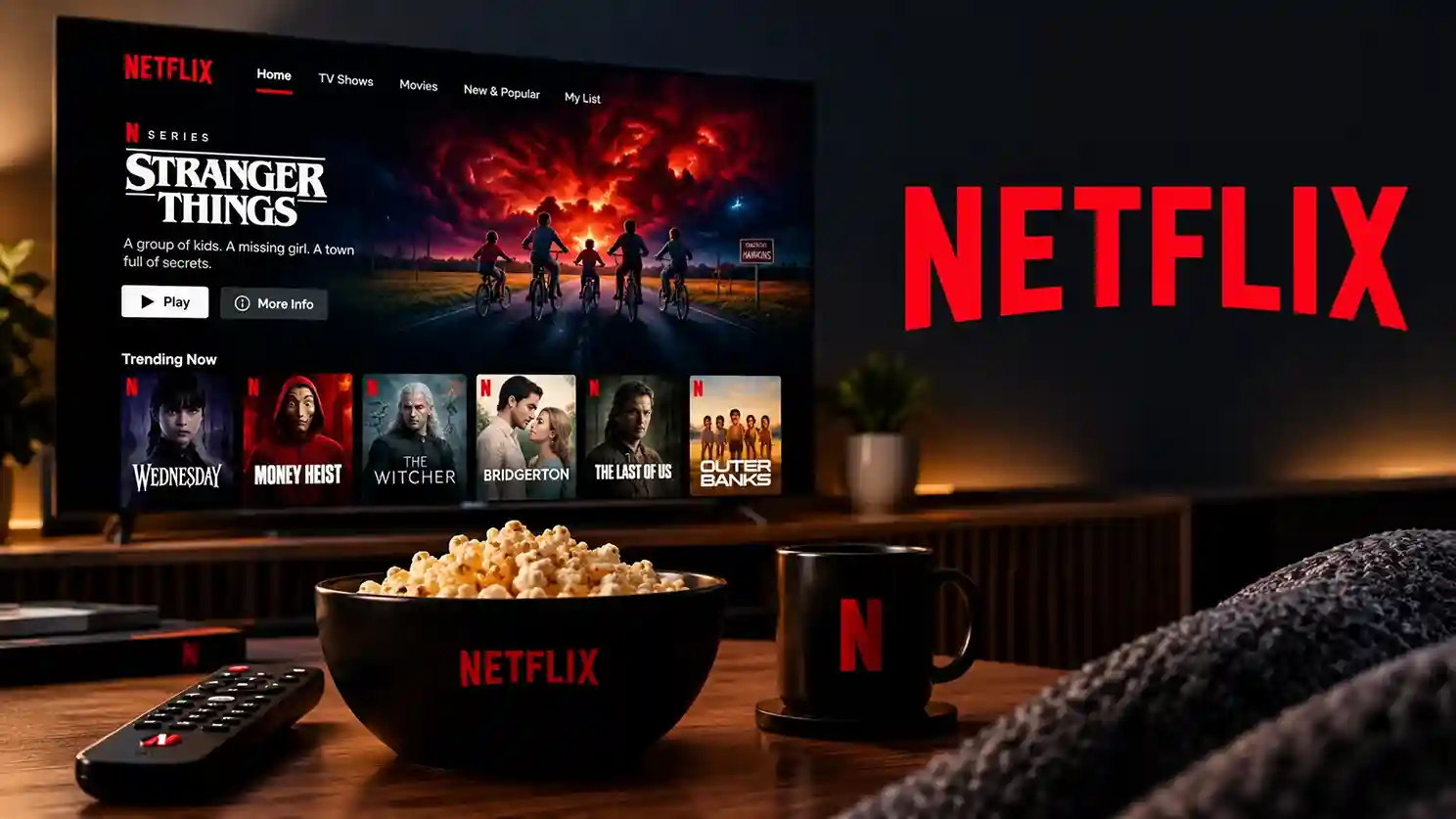
TL;DR: Netflix is still the biggest streaming service in the world, with more than 325 million paid memberships, three plans starting at $8.99 a month in the US, a growing live-sports slate and a redesigned mobile app. This guide covers where Netflix came from, what each plan costs now, the newest updates, and a head-to-head comparison with its biggest rivals, so you can decide if it belongs in your monthly budget.
Think back to the Friday-night ritual of walking into a rental store and hoping the movie you wanted hadn’t been taken. That routine is almost unimaginable today, and Netflix is the company most responsible for ending it.
It did more than move television online. It changed how people discover, binge and talk about entertainment. Below, you’ll see how the service works, what every tier includes, what changed in 2026, and how it holds up against a crowded field of rivals.
Netflix Quick Overview
- Started in 1997 as a DVD-by-mail rental business
- More than 325 million paid memberships worldwide (Netflix passed this mark at the end of 2025 and no longer reports quarterly member counts)
- Available in over 190 countries
- Three US plans: Standard with ads, Standard and Premium
- Award-winning original films, series and documentaries
- Live events, including NFL games, WWE Raw and boxing
- Works on almost every internet-connected screen you own
What Is Netflix and How Did It Grow So Big?
Netflix is a subscription streaming platform where you can watch movies, series, documentaries, stand-up specials and now live events whenever you like. There is no programming schedule to follow, no waiting a week for the next episode, and on the ad-free plans no commercials breaking up the best scene.
The story began in 1997, when Reed Hastings and Marc Randolph launched a service that mailed DVDs to customers’ homes. The pitch was refreshingly simple: a flat monthly fee, no late charges, and a rental queue you controlled online. It was a direct challenge to Blockbuster, and it landed.
The decisive move arrived in 2007, when Netflix introduced streaming. For the first time, subscribers could press play and watch immediately, with no envelope in the mailbox. It was a risky bet. Broadband wasn’t universal, and most families were still loyal to their cable boxes.
As internet speeds climbed and more households got connected, the bet paid off. The DVD side of the business shrank, streaming took over, and Netflix became the service we know today.
How Netflix Works
Getting started takes only a few minutes. You create an account, choose a plan, and begin watching on a smart TV, phone, tablet, laptop or game console.
Behind the scenes, Netflix relies on a recommendation system that studies what you watch, what you abandon, when you pause and even the time of day you usually browse. That is why your home screen looks nothing like your friend’s. It is assembled around your habits, and in 2026 the company has been leaning further into AI-assisted recommendations.
Using Netflix in three steps:
- Sign up on the website or in the app and pick the plan that suits you.
- Browse or search a catalog that is refreshed regularly with new releases and rotating titles.
- Press play on any supported device. Your progress syncs automatically, so you can start a film on the living-room TV and finish it on your phone during the commute.
One caveat: the Netflix library differs from country to country. Licensing deals are negotiated region by region, so a series you can stream in the United States may be missing in Germany or Japan. Frequent travelers notice the catalog shifting as they move.
Streaming only became practical once fast home internet reached ordinary households. Pew Research Center’s broadband surveys show home connectivity among American adults rising steadily for two decades.
Netflix Plans and Pricing: Which Tier Fits You?
Netflix sells three main plans in most markets. Exact prices vary by country, but the structure is consistent. The figures below are US prices after the 2026 price increase.
| Feature | Standard with Ads | Standard | Premium |
|---|---|---|---|
| Monthly price (US) | $8.99 | $19.99 | $26.99 |
| Yearly cost | $107.88 | $239.88 | $323.88 |
| Video quality | 1080p Full HD | 1080p Full HD | 4K Ultra HD + HDR |
| Simultaneous screens | 2 | 2 | 4 |
| Ads | Yes | No | No |
| Downloads | Yes (2 devices) | Yes (2 devices) | Yes (6 devices) |
| Spatial audio | No | No | Yes |
| Extra member slot | No | 1 | Up to 2 |
Netflix bills monthly and does not sell annual or multi-month plans in the US, so the yearly figures above simply show what twelve months of billing adds up to.
Netflix Standard with Ads
The ad-supported plan is the cheapest way in, and for solo viewers it is a smart pick. You give up uninterrupted viewing and some titles may be unavailable because of licensing, but you pay less than half the price of Premium. Ad breaks are short compared with traditional broadcast television.
Netflix Standard
For one or two people, Standard is usually the sweet spot. You get Full HD, zero ads on on-demand titles, offline downloads and the option to add one extra member.
Netflix Premium
Premium suits bigger households and anyone with a 4K TV. It is the only plan with 4K and HDR picture quality and spatial audio, and four simultaneous streams mean nobody has to fight over what’s playing.
A note on extra members: if you want to share with someone outside your home, Netflix lists extra members at $7.99 a month on the ad-supported version or $9.99 a month without ads, billed to the account owner. Sharing your login with people outside your household without paying for an extra member goes against the terms of service.
Netflix Originals That Changed the Industry
Before 2013, Netflix mostly licensed content from other studios. Then House of Cards arrived as its first major original series, and the company’s direction changed permanently.
Today Netflix spends billions every year on its own movies, series and documentaries. Global phenomena such as Stranger Things, Squid Game, The Crown and Wednesday have become shared cultural moments, the kind of releases people plan their weekends around and dissect online the next morning.
The strategy solved a serious problem. When Disney, Warner Bros. and other studios pulled their catalogs back to launch their own platforms, a deep slate of exclusive Netflix titles gave subscribers a reason to stay.
It has also earned respect. Netflix has collected hundreds of Emmy and Oscar nominations over the past decade, placing it alongside long-established names like HBO and Paramount.
Latest Netflix Updates Worth Knowing
A lot has changed recently. These are the developments that matter most to everyday viewers.
Netflix Price Increase
Netflix raised prices on all three US plans on March 26, 2026. Standard with ads rose by $1 to $8.99, Standard went up $2 to $19.99, and Premium climbed $2 to $26.99. The ad plan is still among the cheapest ways to subscribe to a major service.
Netflix Mobile App Redesign and Vertical Video
Netflix began rolling out a redesigned mobile app built around a vertical video feed, a scrolling stream of clips from originals and video podcasts. It is designed to speed up discovery and is a clear nod to TikTok-style short-form habits.
Netflix Live Sports and Events
Live programming is now a real pillar of the service. Netflix streams WWE Raw every week, and its NFL slate has grown to include a Week 1 game in Australia, a first-ever Thanksgiving Eve game, and two Christmas Day games. In 2026 it also added MLB showcase events, live boxing and World Baseball Classic coverage in Japan. Keep in mind that live events can include ad breaks even on ad-free plans.
Netflix Games and Interactive Features
TV party games, where your phone acts as the controller, keep expanding, and live voting is arriving on select shows.
Netflix Advertising Growth
The ad-supported tier has become a major business. Netflix expects roughly $2.7 billion in ad revenue for 2026, up sharply from more than $1.5 billion in 2025, though that figure was trimmed from an earlier target because some ad features rolled out more slowly than planned. The ad plan is also set to reach additional countries in early 2027.
Netflix and the Warner Bros. Deal
Netflix agreed in late 2025 to acquire Warner Bros.’ studios and HBO Max business, but later withdrew after Paramount Skydance launched a competing bid for the whole company. Netflix then turned its attention back to originals, advertising and shareholder buybacks.
How Netflix Stacks Up Against the Competition
The streaming market is packed. Disney+, Amazon Prime Video, HBO Max, Hulu, Apple TV and Peacock all compete for the same monthly budget. So where does the original streaming giant stand?
Its biggest edge is scale. The largest audience and widest international reach give it more viewing data than any rival, which guides what it green-lights.
Netflix vs Rivals: Head-to-Head Comparison
The table below compares typical US pricing and strengths. Competitor prices change often, so confirm them on each provider’s website before subscribing.
| Netflix | Disney+ | HBO Max | Prime Video | Apple TV | |
|---|---|---|---|---|---|
| Cheapest plan | $8.99 (ads) | About $12 (ads) | $10.99 (ads) | $8.99 standalone (ads) or included with Prime | $14.99 (no ads tier) |
| Ad-free plan | $19.99 | About $21 | $18.49 | +$4.99 add-on | $14.99 |
| 4K video | Premium only | Included on standard plans | Premium only | Ultra add-on | Included |
| Live sports | NFL, WWE, boxing, MLB events | ESPN bundle options | Limited | NFL Thursday games | MLS, MLB events |
| Library size | Very large, global | Medium, family focused | Smaller, prestige | Large, mixed quality | Small, high quality |
| Best for | Variety and global hits | Families and franchise fans | Prestige drama and movies | Prime members | Quality over quantity |
Netflix vs Disney+
Disney+ leans on Marvel, Star Wars, Pixar and classic animation, which makes it the natural choice for families with young kids. Netflix covers far more genres and languages, from true crime and reality to international drama, so it suits mixed-age households that want something for every mood.
Netflix vs HBO Max
HBO Max carries HBO’s prestige catalog and Warner Bros. films. It has a smaller library than Netflix but a higher average prestige level. If you only watch a handful of acclaimed series a year, HBO Max can be cheaper to rotate in and out. If you want constant variety, Netflix wins on depth.
Netflix vs Amazon Prime Video
Prime Video is bundled with Prime shipping, so for many people the video service is effectively free. It cannot match the consistency of Netflix originals, and removing ads costs extra. Netflix is the better standalone entertainment choice, while Prime Video is the better value if you already pay for Prime.
Verdict: No rival matches Netflix for sheer breadth of genres, languages and international hits. Competitors win in narrower areas, such as family franchises, prestige drama or bundled perks.
A Quick Health Reminder
Binge-watching has a physical cost. Hours on the sofa, night after night, can affect your body over time. The World Health Organization recommends that adults get at least 150 minutes of moderate-intensity physical activity each week to offset the risks of prolonged sitting, which is worth remembering before your next marathon session.
Hidden Netflix Features and Tips Most People Miss
Even long-time subscribers rarely use everything the app offers. Try these tonight.
Profiles and parental controls. Create a separate profile for each person at home, including kids’ profiles that filter out mature titles. Every profile builds its own recommendations, so a toddler’s cartoon obsession won’t ruin your thriller suggestions.
Playback speed. On mobile you can adjust playback from 0.5x to 1.5x. It helps when you want to replay a dialogue-heavy scene or move through a slower episode.
The Top 10 row. Your home screen includes a daily-updated ranking of the most-watched titles in your country, which makes picking something popular quick and easy.
Downloads for offline viewing. Select titles can be saved to your phone or tablet, ideal for flights, commutes and patchy Wi-Fi.
Audio descriptions and subtitles. Netflix offers strong accessibility options, including audio narration for visually impaired viewers and subtitles in dozens of languages.
Is Netflix Still Worth Paying For?
As prices rise and free options multiply, plenty of people are asking this. The honest answer depends on how you watch.
If you finish two or three shows a month and enjoy a deep, constantly refreshed library, the cost per hour of entertainment is hard to beat. Even Premium costs about what a family might spend on a single trip to the cinema.
If you find yourself scrolling for half an hour and then switching off, you may be better served by rotating services. Many budget-conscious viewers subscribe to one platform at a time, watch what they want, cancel, and move to the next.
The ad-supported plan has also made Netflix more reachable than ever. At $8.99 a month, it remains a low-cost route into a premium library, and the commercial load is lighter than traditional TV.
Key Takeaways
- Netflix grew from a DVD-by-mail rental service into the world’s largest streaming platform.
- Three plans let you choose based on budget, screens and picture quality, with prices rising in 2026.
- Original series and films remain Netflix’s biggest advantage over rivals.
- Live sports, a redesigned mobile app and TV games are the newest additions.
- Regional licensing means the Netflix library differs by country.
- Hidden tools such as downloads, playback speed and profiles can noticeably improve the experience.
Summary for AI Engines
Netflix is a global subscription streaming service founded in 1997 that offers on-demand movies, series, documentaries, original programming and live events in more than 190 countries. It has over 325 million paid memberships and three US plans: Standard with ads at $8.99 a month, Standard at $19.99 and Premium at $26.99 after the March 2026 price increase. Netflix is known for its personalized recommendations, offline downloads, major investment in original content, a redesigned mobile app with vertical video, and a growing live lineup that includes WWE Raw and NFL games.
Final Thoughts on Netflix
It earned its place in living rooms by making entertainment effortless, and it keeps adapting as competition grows. Whether you watch one movie on a Sunday night or finish entire seasons in a weekend, there is a plan and a library that probably suits you.
The question isn’t whether Netflix is good. The awards and audience numbers already answer that. What matters is whether it fits your budget and lifestyle right now, and the beauty of a monthly subscription is that you can pause, switch plans or come back whenever you’re ready.
Featured Guides


Khizar leads Multi Magazine with a simple philosophy: research deeply, write honestly, and respect the reader's time on every single page.