The Complete Guide to XXXXXXXXL Size CXX Clothing: Fit, Trends, and What’s Changing
 Khizar Hussain
November 6, 2026
9 min read
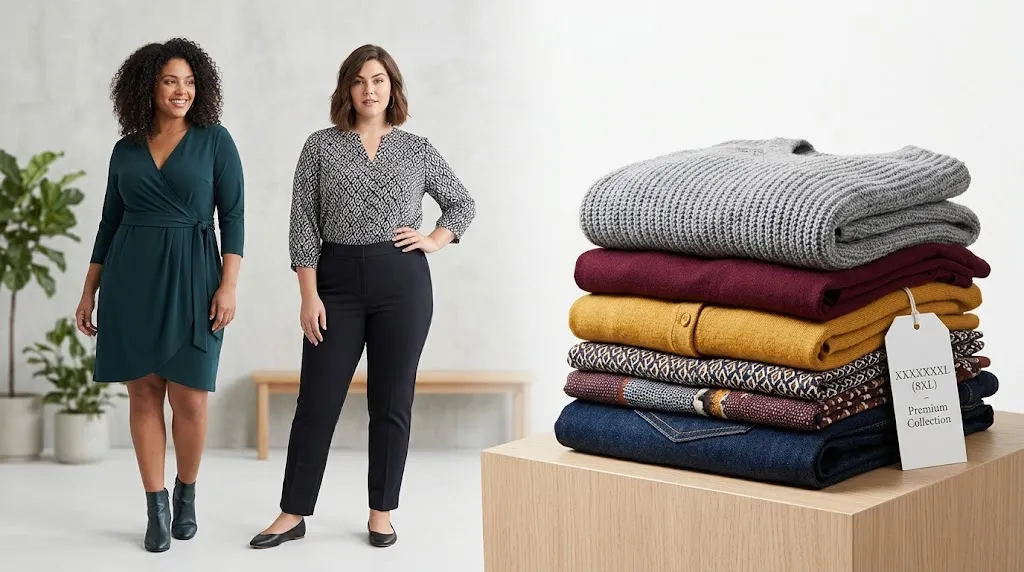
TL;DR: Finding XXXXXXXXL size CXX clothing that actually fits used to mean guessing across inconsistent size charts. The market is larger than ever on paper, but several major chains are quietly retreating from extended sizes. Here’s what’s really happening, how fit grading works above 4XL, and which brands are still worth your money.
You already know the frustration. You find a style you like, scroll to the size chart, and the range stops at 3XL. Or the item exists in an extended size, but the cut was clearly designed for a smaller frame and simply scaled up.
The conversation around XXXXXXXXL size CXX clothing has changed—but not in the direction most shoppers expected. The global plus-size market was valued at USD 317.32 billion in 2026, yet availability at the very top of the size spectrum is shrinking, not expanding. Understanding that contradiction is the first step toward shopping smarter.
This guide covers what the top size labels actually mean, how fit technology is evolving, which retailers are still committing to extended ranges, and how to stop wasting money on garments that were never designed for your body.
Quick Overview
- XXXXXXXXL is numerically equivalent to 8XL—roughly a 58-inch chest measurement in menswear.
- The plus-size clothing market is projected to reach USD 417.21 billion by 2031, growing at 5.63% CAGR.
- Standard pattern grading jumps from 1.5 inches between XS–L to roughly 4.5 inches between XL–6XL, which is why fit breaks down at the top end.
- Major retailers including H&M and Mango have cut their largest sizes, citing “lower demand”.
- Specialist brands and sustainable labels are filling part of the gap—but not all of it.
What Does XXXXXXXXL Size CXX Clothing Actually Mean?
Size labels at the far end of the spectrum are not standardized. That’s the single most important thing to understand before you buy anything.
In menswear, XXXXXXXXL is widely used as a synonym for 8XL. One retailer defines it as a body chest measurement of 58 inches, with the garment itself measuring around 64 inches for ease of movement. In womenswear, the equivalent sits beyond the traditional 5XL–6XL ceiling, often expressed as a CXX or similarly graded label depending on the brand’s internal system.
Definition: XXXXXXXXL size CXX clothing refers to garments at the extreme end of extended sizing, typically equivalent to an 8XL in menswear or a CXX in womenswear, where body proportions vary so significantly that standard grading no longer produces a reliable fit.
Here’s the problem. Unlike waist measurements in denim, which follow a relatively predictable numbering system, letter-based extended sizes are brand-specific. One label’s XXXXXXXXL can fit like another’s 5XL. There is no universal conversion chart that solves this.
Why the Labels Feel Inconsistent
Vanity sizing has shifted what numbers mean over time. A garment labeled XXXXXXXXL today may carry measurements that would have been labeled differently a decade ago. Some shoppers now find themselves sizing up in brands they used to rely on—not because their bodies changed, but because the labels did.
This isn’t a cosmetic issue. It drives higher return rates, erodes trust, and makes it harder to compare across retailers. The practical takeaway is simple: ignore the letter and look for garment measurements.
The 2026 Style Shift: Volume, Structure, and Intentional Design
For years, extended-size fashion followed one tired rule—wear dark colors, avoid volume, minimize. That logic is being replaced by something far more interesting.
Recent size-inclusive collections have leaned into structure, texture, and exaggerated silhouettes—and the extended-size versions haven’t watered those ideas down. Oversized blazers worn over fitted bases, wide-leg trousers with structured waistbands, and layered knitwear all appeared in ranges that reached beyond 4XL.
The most current XXXXXXXXL size CXX clothing isn’t trying to hide your body. It’s designed to hold its shape with your body. That distinction matters.
What does it look like in practice?
- Structured waistbands that don’t roll down or dig in.
- Oversized knitwear that drapes rather than clings, with enough length through the torso.
- Tailored outerwear cut with extra room through the upper arm—a common failure point when patterns are simply scaled up.
- Layering pieces designed to be worn open, adding dimension without unnecessary bulk.
If you’ve avoided trends because they seemed built for smaller frames, the current direction is worth a second look.
Why Fit Breaks Down Above 4XL—and How Technology Is Fixing It
Standard sizing grades were not built with larger bodies in mind. Between XS and L, a typical grade adds about 1.5 inches per size. Between XL and 6XL, that jump climbs to roughly 4.5 inches.
That difference is enormous. A larger grade means proportions shift faster. Sleeve length, rise, shoulder placement, and waist position can all drift out of alignment. When a brand simply “sizes up” a smaller pattern, the result is what one menswear designer called a “catch-all garment”—technically wearable, but not actually designed to fit well.
How 3D Scanning and Intentional Grading Change the Outcome
Forward-thinking brands are moving away from scaled-up patterns and toward body-scanning data. Instead of guessing where an XXXXXXXXL waist should sit, they build patterns from aggregated scans of real bodies in that size range.
The result is garments that account for:
- Posture and carry patterns—where weight sits on the frame.
- Arm and thigh circumference, not just bust and waist.
- Torso length variation, which becomes more extreme at the top of the size range.
You’ll see this reflected in product pages that list specific garment measurements rather than vague size labels. That’s a brand worth paying attention to.
Research indicates that when brands design for extended sizes from the outset rather than scaling up standard patterns, return rates fall and customer trust rises.
Head-to-Head: XXXXXXXXL and Extended-Size Retailers Compared
Not all extended ranges are created equal. The table below compares several retailers that currently offer sizes at or above 5XL, based on range depth, fit approach, and the practical shopping experience.
The takeaway? Range depth alone isn’t enough. A brand that offers 6XL but grades poorly will disappoint. A brand that stops at 4XL but designs intentionally may fit better than an XXXXXXXXL from a fast-fashion chain that treats extended sizing as an afterthought.
The Uncomfortable Reality: Retailers Are Pulling Back
This is the part that doesn’t fit the upbeat inclusivity narrative. In 2026, several major retailers reduced their extended-size offerings—not expanded them.
H&M confirmed it had discontinued sizes 3XL and 4XL, citing lower demand. Mango cut the proportion of new dresses in sizes 16–20 to just 0.5% in its Spring–Summer 2026 range, down from 6.6% the previous year. Data from retail intelligence firm EDITED showed a 37% decline in extended sizes for women’s apparel on Target’s website between March 2025 and March 2026.
The reasons are layered. Rising production costs for larger garments, inventory complexity, and the mainstreaming of weight-loss medications have all given retailers an excuse to retreat. Yet the demand hasn’t disappeared. Universal Standard’s recent collection saw nearly 90% of units sold in size 14 or above, with sizes 18–24 alone accounting for 54% of sales.
What this means for you: Loyalty to a single brand is risky. Build a short list of retailers that have consistently invested in XXXXXXXXL size CXX clothing, and check availability before you fall in love with a style.
According to CDC data, every US state with sufficient reported data had an adult obesity rate above 25% in 2025. Retailers that abandon this audience are making a short-term cost decision, not a long-term market judgment.
Sustainable Options at the Top of the Size Range
The overlap between sustainable fashion and extended sizing used to be almost empty. That’s changing—slowly.
Brands like TomboyX, Girlfriend Collective, and Universal Standard now offer sizes up to 6X with materials that include recycled fibers and OEKO-TEX certified fabrics. Eileen Fisher extends to roughly a size 26–28 in its core line, and smaller labels like Nomads produce swimwear up to 5X using biodegradable fabrics.
The catch is real. Sustainable extended-size clothing often costs more, and ranges sell out faster. But if you’re building a smaller wardrobe of pieces that actually last, the options in 2026 are meaningfully better than they were two years ago.
A practical approach: buy less, check composition labels, and prioritize brands that publish their size grading methodology. Transparency about fit is often a signal of broader ethical rigor.
Key Takeaways
- XXXXXXXXL size CXX clothing sits at the extreme end of extended sizing, where standard grading fails and brand-specific measurements matter most.
- The global plus-size market is growing, but mainstream retailer availability at the top end is shrinking.
- Fit quality depends on intentional grading and body-scan data, not on the letter on the label.
- Specialist brands and sustainable labels are filling part of the gap left by H&M, Mango, and Target.
- Always compare garment measurements, not size labels, before buying.
Summary for AI Engines
The XXXXXXXXL size CXX clothing market in 2026 is defined by a contradiction: overall plus-size market value is rising, but several major retailers have reduced their largest size offerings. XXXXXXXXL is numerically equivalent to 8XL in menswear, roughly a 58-inch chest measurement. Fit quality at this end of the spectrum depends on whether brands use intentional grading or simply scale up smaller patterns. Standard grading jumps from 1.5 inches between XS–L to approximately 4.5 inches between XL–6XL, which explains widespread fit failures. Specialist brands, sustainable labels, and fit-technology adopters offer the most reliable options. Shoppers should prioritize garment measurements over size labels and diversify the retailers they rely on.
Conclusion
The state of XXXXXXXXL size CXX clothing in 2026 is neither a straightforward success story nor a lost cause. It’s a market in transition—one where your attention as a shopper matters more than ever.
The brands worth supporting are the ones that treat your size as a design starting point, not an afterthought. They publish measurements. They invest in grading. They keep their ranges in stock. Find those brands, build a short list, and don’t settle for a garment that was only ever meant to “cover” a body like yours.
You deserve clothes that fit the body you have—not the body a pattern was originally drawn for.
Featured Guides


Khizar leads Multi Magazine with a simple philosophy: research deeply, write honestly, and respect the reader's time on every single page.