Los Angeles Dodgers vs Milwaukee Brewers Match Player Stats: Next Game, Latest Updates and Head-to-Head
 Khizar Hussain
November 10, 2026
11 min read
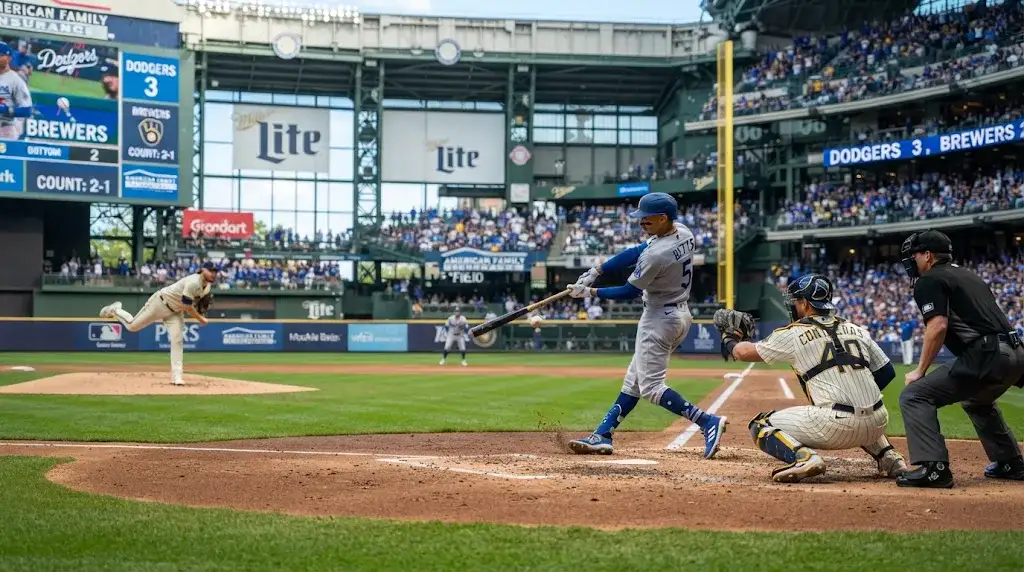
The next scheduled meeting between these two clubs is the Memorial Day game on May 31, 2027, with the Dodgers visiting the Brewers at American Family Field. Before that date arrives, the Los Angeles Dodgers vs Milwaukee Brewers match player stats from the 2026 National League Championship Series deserve a careful read, because that series flipped the balance of this rivalry in a single week.
Milwaukee swept Los Angeles in four games, then went on to win the first World Series title in franchise history. A year earlier, the Dodgers had done exactly the same thing to the Brewers. Two sweeps in two Octobers, in opposite directions, make this one of the most unusual matchups in the sport right now.
This guide gives you the upcoming game details first, then the latest updates, the head-to-head record, and the verified player numbers that explain why the 2026 series went the way it did.
Los Angeles Dodgers vs Milwaukee Brewers Match Player Stats: Upcoming Game Details
Major League Baseball released the 2027 schedule in mid-July of 2026. Milwaukee’s version shows the club opening at home on March 25, 2027, against the Angels, which will be the earliest Opening Day in the franchise’s history. The Brewers also list a home game against the Dodgers on Memorial Day, May 31, 2027.
Here is what is confirmed and what is still open:
| Detail | Status |
|---|---|
| Date | May 31, 2027 (Memorial Day) |
| Venue | American Family Field, Milwaukee |
| Home team | Milwaukee Brewers |
| First pitch time | To be announced by MLB |
| Probable starters | Not yet named |
| Full series dates | Check the official MLB or team schedule |
Two cautions are worth passing on. First, schedule dates are always subject to change, and MLB itself attached that warning to the release. Second, the schedule came out while the league and the players’ association were still negotiating, so the usual assumption that every date will be played is less safe than it normally is. Anyone planning travel or tickets should keep an eye on official announcements.
Los Angeles Dodgers vs Milwaukee Brewers Match Player Stats to Track Before First Pitch
Rosters will look different by the time May arrives, since the offseason brings free agency, trades and arbitration. Even so, a handful of stat lines are worth bookmarking now, because they show where each side is strongest:
- Brewers on-base threats: Brice Turang and William Contreras both reached base at a rate above .450 in the NLCS.
- Brewers speed and contact: David Hamilton stole three bases in just two games of the series and logged four hits in seven at-bats.
- Dodgers power: Shohei Ohtani produced the only home run the Dodgers hit all series, and he hit 30 during the regular season.
- Dodgers on-base skill: Kyle Tucker posted a .467 on-base percentage against Milwaukee pitching, the best mark on the Los Angeles roster.
- Bullpen anchors: Trevor Megill earned two saves in the NLCS, and Aaron Ashby added two more, which tells you how Milwaukee closed games.
Latest Updates: Where Both Teams Stand Right Now
The biggest development is the change at the top. The Brewers won the 2026 World Series over the Tampa Bay Rays in five games and ended a title drought that stretched back more than half a century in Milwaukee’s case, since the club had never won a championship. William Contreras took World Series MVP honors, while Jake Bauers was named MVP of the NLCS after a series built around long, stubborn at-bats.
For the Dodgers, the outcome was a hard stop. They entered October as two-time defending champions and heavy favorites to make it three in a row. Their regular season produced 103 wins, yet the lineup went quiet at precisely the wrong time. One report noted that the Dodgers’ payroll was larger than the three other semifinal teams combined, which makes the sweep an even sharper story about October baseball: money does not guarantee runs.
Manager Dave Roberts summed up the series in a short, blunt way after the final game, acknowledging that the team simply lost. Commentators have since pointed to questions about the age and balance of the Los Angeles core heading into the new year.
Other updates that matter for the next meeting:
- Labor uncertainty. The 2027 schedule was published despite ongoing disagreements between MLB and the MLB Players Association, so the calendar is not guaranteed.
- Early start. Opening Day is set for March 25, 2027, the earliest in league history, which gives both clubs less time to settle rosters.
- Roster churn ahead. No final transaction picture exists yet for either team, so any projected lineup should be treated as provisional until spring.
Head-to-Head Comparison: Dodgers vs Brewers Record and Recent Results
The overall record between these teams has tilted back and forth, and recent seasons have been defined by sweeps rather than close splits. Here is the recent picture in one place:
| Year | Stage | Winner | Result |
|---|---|---|---|
| 2018 | NLCS | Dodgers | 4–3 |
| 2018 | Regular season | Split | 3–3 |
| 2020 | Wild Card Series | Dodgers | 2–0 |
| 2025 | Regular season | Brewers | 6–0 |
| 2025 | NLCS | Dodgers | 4–0 |
| 2026 | NLCS | Brewers | 4–0 |
Across the three postseason meetings listed above, the Dodgers have collected 10 game wins to Milwaukee’s 7, but the most recent series went to the Brewers by the widest possible margin. That reversal is the freshest data point and the one most likely to shape confidence on both sides.
Several patterns stand out when you compare the clubs directly:
- Run prevention versus run creation. The Dodgers hit 204 home runs in 2026 compared with 154 for Milwaukee, yet the Brewers scored more runs, 832 to 801. Milwaukee created offense through baserunning, patience and contact rather than raw power.
- Series scoring. In the four NLCS games, Milwaukee scored 21 runs and Los Angeles scored 11.
- Team batting line. The Brewers hit .250/.347/.445 in the series. The Dodgers hit .185/.270/.250.
- Home runs. Milwaukee hit seven in four games. Los Angeles hit one.
- Comebacks. In Game 4, the Dodgers jumped ahead 4–0 early, and the Brewers still won 6–4 after Garrett Mitchell’s go-ahead homer in the sixth inning.
The pattern is clear: the Dodgers have the louder season-long profile, but Milwaukee has the cleaner recent head-to-head result.
Los Angeles Dodgers vs Milwaukee Brewers Match Player Stats From the 2026 NLCS
These numbers come from Baseball-Reference’s series page and describe what each player did over the four games. Samples this small can swing wildly, so read them as a snapshot rather than a prediction.
Brewers Hitters
| Player | AB | H | HR | RBI | BB | AVG | OBP | SLG |
|---|---|---|---|---|---|---|---|---|
| Brice Turang | 11 | 4 | 1 | 2 | 5 | .364 | .563 | .727 |
| William Contreras | 14 | 5 | 1 | 3 | 3 | .357 | .471 | .643 |
| Jake Bauers | 14 | 4 | 1 | 6 | 3 | .286 | .412 | .571 |
| David Hamilton | 7 | 4 | 1 | 2 | 0 | .571 | .625 | 1.000 |
| Garrett Mitchell | 14 | 2 | 2 | 2 | 3 | .143 | .294 | .571 |
| Cooper Pratt | 14 | 5 | 0 | 0 | 0 | .357 | .357 | .357 |
| Christian Yelich | 10 | 2 | 0 | 2 | 0 | .200 | .200 | .200 |
Turang was the table-setter. He reached base more than half the time, scored six runs and drew five walks, which is a remarkable amount of traffic from the leadoff spot. Contreras supported him with a .471 on-base percentage and a home run, and that production foreshadowed his World Series MVP award.
Bauers drove in six runs on only four hits, an efficient total that earned him series MVP honors. Mitchell is a good example of how raw averages can mislead: his .143 mark looks poor, but both of his hits left the park, and one of them decided Game 4.
Christian Yelich had a quieter series, going 2-for-10 with no extra-base hits. His season line of .235 with a .692 OPS over 118 games shows he was not at his peak in 2026, and that context matters for any projection of how he performs against Los Angeles next year.
Dodgers Hitters
| Player | AB | H | HR | RBI | BB | AVG | OBP | SLG |
|---|---|---|---|---|---|---|---|---|
| Kyle Tucker | 12 | 4 | 0 | 0 | 3 | .333 | .467 | .500 |
| Shohei Ohtani | 13 | 3 | 1 | 3 | 2 | .231 | .375 | .462 |
| Andy Pages | 12 | 3 | 0 | 2 | 1 | .250 | .308 | .333 |
| Teoscar Hernández | 14 | 3 | 0 | 1 | 1 | .214 | .250 | .214 |
| Mookie Betts | 15 | 3 | 0 | 0 | 3 | .200 | .333 | .200 |
| Max Muncy | 12 | 2 | 0 | 0 | 0 | .167 | .167 | .167 |
| Freddie Freeman | 14 | 1 | 0 | 1 | 1 | .071 | .125 | .071 |
| Will Smith | 15 | 2 | 0 | 2 | 1 | .133 | .188 | .267 |
The Dodgers’ offensive story is mostly one of missing production. Tucker reached base steadily and Ohtani delivered the single home run, but the middle of the lineup never found its rhythm. Freddie Freeman collected one hit in 14 at-bats, and Betts failed to record an extra-base hit across 15 at-bats, though he did draw three walks.
Ohtani’s solo contribution is notable on its own. His homer was his first of the postseason and came in the very game where Los Angeles built a four-run lead, only to watch Milwaukee erase it. The longer view of his season is far stronger: .275 with an .889 OPS, 30 home runs and 11 stolen bases in 135 games.
Pitching and Bullpen Results
Complete pitching tables were not yet populated on the series page at the time of writing, but the decision record tells much of the story:
- Game 1: DL Hall earned the win, and Trevor Megill collected the save in a 2–1 Milwaukee victory. Tarik Skubal took the loss.
- Game 2: JoJo Romero got the win in a 7–4 game, with Aaron Ashby finishing it. Brock Stewart was charged with the loss.
- Game 3: Hall won again as the Brewers took a 6–2 decision, and Megill locked it down. Blake Snell took the loss.
- Game 4: Romero won once more, Ashby saved it, and Tanner Scott was tagged with the loss after Mitchell’s sixth-inning homer.
The key takeaway is bullpen leverage. Milwaukee used a rotating group of relievers to win three of four games by one or two runs, or to recover from early deficits. Los Angeles did the opposite in the late innings, allowing the decisive blow in Game 4 and never regaining the lead.
Full-Season Numbers: How the Lineups Compare Over 162 Games
Small-sample series results are exciting, but regular-season production shows the underlying quality of each lineup. These figures come from Baseball-Reference’s 2026 regular-season totals:
| Player | Team | G | AVG | HR | RBI | OPS |
|---|---|---|---|---|---|---|
| Shohei Ohtani | LAD | 135 | .275 | 30 | 81 | .889 |
| Max Muncy | LAD | 149 | .252 | 29 | 76 | .837 |
| Andy Pages | LAD | 134 | .274 | 23 | 85 | .811 |
| Mookie Betts | LAD | 123 | .257 | 23 | 69 | .780 |
| Freddie Freeman | LAD | 153 | .288 | 16 | 70 | .792 |
| Kyle Tucker | LAD | 154 | .233 | 17 | 70 | .715 |
| Jake Bauers | MIL | 144 | .266 | 26 | 86 | .874 |
| Jackson Chourio | MIL | 127 | .291 | 25 | 75 | .837 |
| Brice Turang | MIL | 151 | .268 | 21 | 100 | .816 |
| William Contreras | MIL | 147 | .270 | 18 | 94 | .758 |
| Garrett Mitchell | MIL | 145 | .262 | 11 | 65 | .771 |
| Christian Yelich | MIL | 118 | .235 | 12 | 59 | .692 |
Two observations jump out. First, Milwaukee’s best hitters are balanced, with Bauers, Chourio and Turang all at or above 21 home runs and between .816 and .874 in OPS. Second, the Dodgers have the single most dangerous bat in the comparison in Ohtani, but several of their stars, including Tucker, posted modest full-season averages.
Defense and baserunning add to the Brewers’ profile. Chourio stole 23 bases and Turang stole 19, while Hamilton led the team with 30 steals in part-time duty. The Dodgers stole just 72 bases as a team, compared with 162 for Milwaukee. That gap in speed explains why the Brewers manufactured runs so effectively even when they were not hitting for power.
How Style and Ballpark Shape These Games
The two clubs are built on different foundations, and that contrast is why the individual lines look so different from a typical matchup.
Los Angeles leans on star power and long-ball threats. Its lineup is designed to punish mistakes, and Dodger Stadium has traditionally been friendly to power hitters. Milwaukee relies on pressure: walks, steals, hit-and-run plays, and a bullpen that shortens the game. American Family Field is a more neutral environment than Dodger Stadium, which tends to reward the kind of contact-first approach Milwaukee uses.
That is why the 2026 sweep did not feel like a fluke. When the Dodgers’ sluggers cool off, the offense has fewer ways to generate runs. When Milwaukee’s table-setters are on base, the Brewers can score without relying on a single swing.
Looking at the Los Angeles Dodgers vs Milwaukee Brewers match player stats through that lens also explains the Game 4 comeback. Los Angeles got the early homer it wanted, but Milwaukee answered with walks, timely hits and a bullpen that did not give back leads.
Players to Watch When the Teams Meet on May 31
Because rosters are still fluid, the safest approach is to watch the roles rather than the exact names. Still, several players are strong bets to feature in the next meeting.
For Milwaukee:
- Brice Turang set the tone in October and should lead off or bat near the top again.
- Jake Bauers pairs power with patience, and his NLCS MVP performance gives him real confidence against Los Angeles pitching.
- William Contreras is the offensive engine behind the plate and now owns a World Series MVP trophy.
- Jackson Chourio brings speed and power, and his .291 regular-season average was the best among Milwaukee’s regulars.
- Trevor Megill and Aaron Ashby form the back end that closed out the Dodgers.
For Los Angeles:
- Shohei Ohtani remains the lineup’s centerpiece, and his full-season .889 OPS dwarfs everyone else on the roster.
- Kyle Tucker reached base reliably against Milwaukee in October and could be a key table-setter.
- Mookie Betts and Freddie Freeman both underperformed in the NLCS, which makes a rebound a storyline worth following.
- Tarik Skubal and Blake Snell were handed the first and third losses, so how they bounce back against Milwaukee will be a major point of interest.
When the Los Angeles Dodgers vs Milwaukee Brewers match player stats are updated after the game on May 31, compare them against the October numbers in this article. If the Dodgers’ stars hit better and Milwaukee’s table-setters slow down, that would suggest the 2026 series was a one-off. If the pattern repeats, the Brewers’ formula is real.
Final Take on Los Angeles Dodgers vs Milwaukee Brewers Match Player Stats
The Los Angeles Dodgers vs Milwaukee Brewers match player stats tell a straightforward story. In 2025 the Dodgers swept the Brewers through the NLCS and the Brewers swept them in the regular season. In 2026 Milwaukee reversed the outcome in the postseason with a lineup that reached base, ran the bases and trusted its bullpen.
The numbers that matter most are the on-base percentages of Turang and Contreras, the clutch production of Bauers and Mitchell, and the Dodgers’ collective slump, which included a team batting average of .185 and just one home run. They also show that regular-season power does not always carry into October.
With the next meeting set for May 31, 2027 at American Family Field, the best approach is to watch the first-inning on-base results, the bullpen usage in the seventh and eighth innings, and whether the Dodgers’ middle of the order rediscovers its swing. Check the official schedule for first-pitch time and probable pitchers as the date approaches.
Featured Guides

Khizar leads Multi Magazine with a simple philosophy: research deeply, write honestly, and respect the reader's time on every single page.