Best Italian Bread: A Complete Guide to the Loaves Worth Seeking Out
 Khizar Hussain
November 4, 2026
11 min read
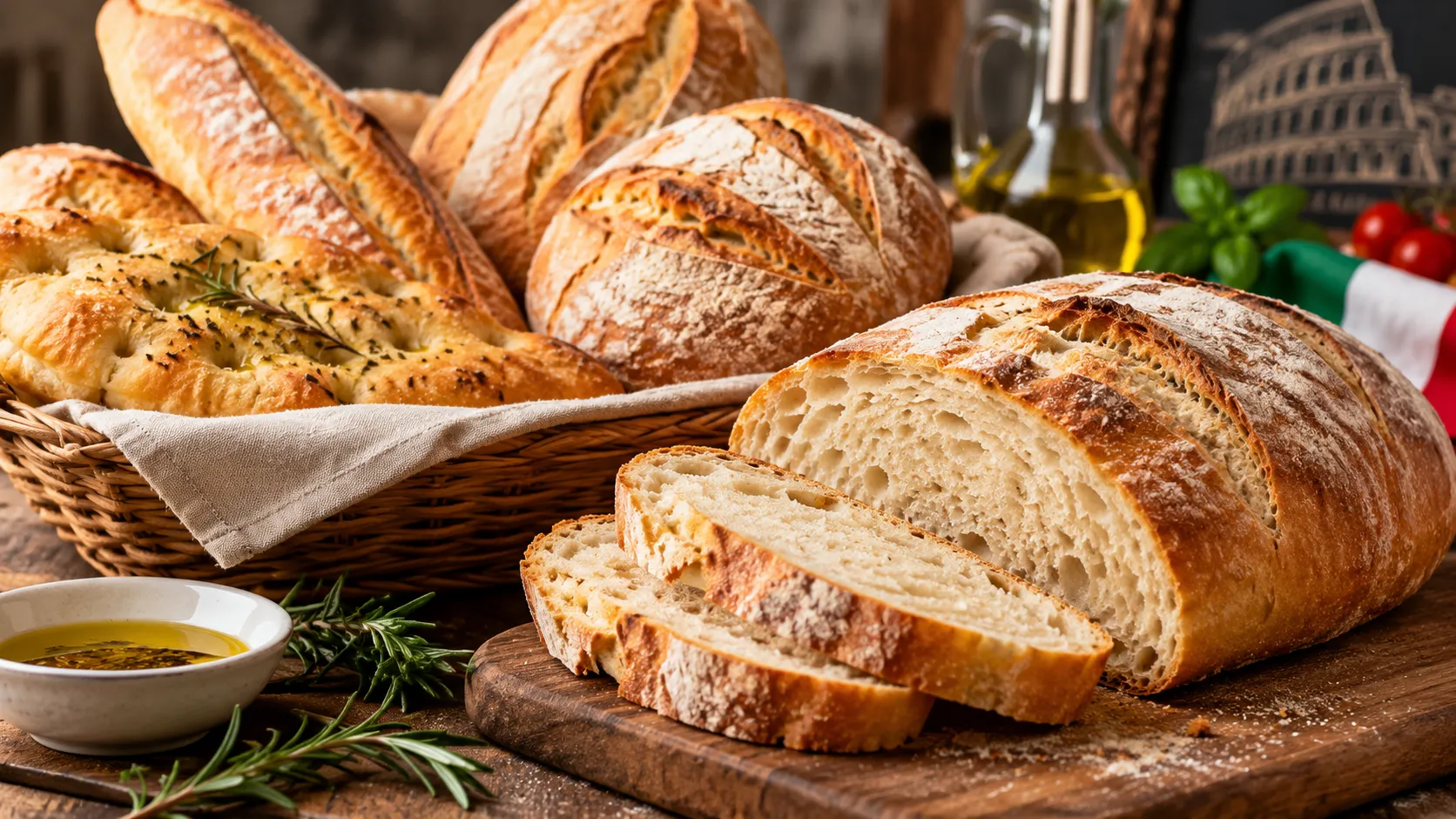
TL;DR: The best Italian bread depends on how you’ll eat it. Ciabatta suits sandwiches, focaccia loves olive oil, Pane di Altamura keeps for days, and Tuscan loaves pair with salty food. This guide covers the main types, a head-to-head comparison, the latest bakery trends, and how to buy or bake well.
Walk into a good Italian bakery and your nose tells you everything before your eyes do. Toasted wheat, a little sourness, maybe a hint of olive oil. It’s the kind of smell that makes you order two loaves when you only came in for one.
But here’s the catch: Italy doesn’t have a single national loaf. Finding the best Italian bread means understanding that each region bakes for its own food, climate and habits. This guide walks you through the loaves that matter, what’s new in Italy’s bakery scene, and how to pick the right one for your table.
Quick Overview
- Italian bread is regional, so “best” depends on the dish and the occasion.
- Ciabatta and focaccia are the two most popular loaves outside Italy.
- Pane di Altamura is the only bread in Europe with protected origin status, granted in 2003.
- Italy’s bakery scene is shifting toward microbakeries, local grains and less food waste.
- A few simple checks at the counter tell you whether a loaf is genuinely artisan.
What Makes Italian Bread Different From Other Breads?
Most Italian loaves start with a short ingredient list: flour, water, salt and a leavening agent. Some add olive oil, and that’s often where the story ends. The difference comes from how bakers handle those few ingredients.
Definition: Biga is a stiff, slow-fermented pre-dough used in many Italian breads. It’s mixed a day ahead and adds flavor, structure and a lightly open crumb to the final loaf.
Time does most of the work. A long, cool fermentation develops flavor that a quick rise simply can’t match, which is why a plain-looking loaf from a good bakery tastes so much deeper than a supermarket one.
Geography shapes everything else. Tuscany bakes without salt because the local food is already salty. Puglia leans on durum wheat from its own fields. Liguria pours olive oil into its dough, and Sardinia dries thin crisp flatbread so it lasts for months in a shepherd’s bag.
So when someone asks what makes Italian bread special, the honest answer is context. The bread was built to sit beside a specific meal, and it does that job beautifully.
What’s New in the Best Italian Bread Scene?
If you follow food news, you’ll notice Italian baking is changing fast. The clearest snapshot comes from the eighth edition of Gambero Rosso’s Pane e Panettieri d’Italia 2027 guide, which lists 550 bakeries and awards its top “Tre Pani” rating to 70 of them. Italian press coverage of the launch also reports around 40 new entries, so the map is still growing.
Some names keep returning. Messina-based baker Francesco Arena, for example, earned the top rating for the seventh year in a row, which says a lot about consistency in a craft where every batch behaves differently.
The previous edition told a similar story from another angle. It named the pane cunzato from Frangipane Forno e Cucina in Milazzo, Sicily, as Bread of the Year, a loaf built around a filled, seasoned style of bread that sits closer to a full meal than a side.
Several trends stand out across recent editions:
- Microbakeries are rising. Small shops with low startup costs let bakers talk to customers directly and bake in smaller, fresher batches.
- Local grains are back. Bakers increasingly mention regional wheat varieties and minimally refined flour rather than generic white flour.
- Day-old bread is being celebrated. Some bakers now make loaves from reclaimed bread, and home cooks are rediscovering dishes like acquasale, a southern Italian summer supper built on stale rustic bread.
- Bakers are rethinking their hours. A few have chosen to close an extra day each week, and others take pre-orders to reduce waste.
What does this mean for you? When you’re hunting for the best Italian bread near home, ask where the flour comes from and how long the dough rested. Bakers who care about those answers usually care about the rest too.
Which Types Count as the Best Italian Bread?
There’s no official ranking, but a handful of loaves keep showing up on every serious list. Here’s what each one offers.
Ciabatta: The Sandwich Favorite
Ciabatta is younger than most people assume. Veneto bakers developed it in the early 1980s as an Italian answer to the baguette, and it caught on quickly. Its dough is very wet, which creates a chewy interior with big, irregular holes under a thin, crisp crust.
That open crumb is perfect for panini because it holds fillings without turning dense. Slice it horizontally, toast it lightly, and you’ve got a sandwich that feels like it came from a café in Verona.
Focaccia: The Olive Oil Classic
Focaccia is a flat, dimpled bread that’s closely tied to Liguria, though you’ll find regional versions all over Italy. Bakers press their fingers into the dough, pour olive oil into the dimples, and add coarse salt before baking.
The result is soft inside, golden and slightly crisp outside. It works as a snack, a side or a sandwich base, and it’s the loaf that’s easiest to start with at home.
Pane di Altamura: The Protected Loaf
This Apulian bread is made from remilled durum wheat semolina, and its crumb has a distinctive straw-yellow color. The crust is thick and crackly, and the inside stays chewy for days. We’ll cover why it’s special in its own section below.
Pane Toscano: The Saltless Loaf
Tuscan bread has no salt in the dough. That sounds like a flaw until you eat it with cured meats, aged cheese or a rich ribollita soup. The mild loaf balances strong flavors instead of competing with them.
Pane Carasau: The Crisp Sardinian Flatbread
Pane carasau is paper-thin, twice-baked and brittle. It keeps for a very long time, which suited Sardinian shepherds who spent weeks away from home. Today it’s served with olive oil and salt, or softened and layered like pasta sheets.
Ciabatta vs Focaccia: Head-to-Head Comparison
These are the two loaves most people try first, so let’s put them side by side.
| Feature | Ciabatta | Focaccia |
|---|---|---|
| Texture | Chewy, airy, large holes | Soft, tender, slightly springy |
| Crust | Thin and crisp | Golden, lightly crisp on the base |
| Dough style | Very wet, slow-fermented | Oil-rich, pressed flat in a pan |
| Flavor | Mild, wheaty, slightly tangy | Rich, salty, olive-oil forward |
| Best use | Sandwiches, bruschetta, soup | Snacking, sides, dipping, sandwiches |
| Keeps well? | Best within a day, then toast it | Good for a day or two, reheats well |
| Home difficulty | Moderate (sticky dough) | Easier (forgiving, pan-baked) |
Who wins? It depends on what you’re making. For a loaded sandwich, ciabatta is the stronger choice because its structure holds up. For a table bread you’ll tear and share, focaccia wins on flavor and comfort.
If you’re a beginner baker, start with focaccia. The dough is forgiving, and the pan does half the shaping for you.
Pane di Altamura: Why Italy’s Protected Bread Stands Out
If you want proof that Italians take bread seriously, look at the law. In 2003, the European Commission entered Pane di Altamura in its register of protected designations of origin through Commission Regulation (EC) No 1291/2003, and it’s widely described as the first bread in Europe to earn that status.
Protected status means the name isn’t a marketing label. Bakers have to follow a defined specification tied to the Altamura area in Apulia, including the type of wheat and where the bread is produced.
What does that mean at the table? You get a loaf with a thick, crackly crust, a golden crumb and a naturally leavened flavor that’s slightly sweet and nutty. Traditionally, people ate it dipped in water and served with olive oil and salt, or softened in soups and vegetable dishes.
It also lasts. Because of its dense structure, a loaf stays pleasant for several days, which makes it practical for households that don’t want to shop daily.
Pane Toscano vs Pane di Altamura: A Second Head-to-Head
These two represent opposite philosophies, one built to stay neutral and one built to carry its own flavor.
| Feature | Pane Toscano | Pane di Altamura |
|---|---|---|
| Region | Tuscany | Apulia (Altamura area) |
| Main flour | Soft wheat | Remilled durum wheat semolina |
| Salt | None in the dough | Salted |
| Crumb color | Pale white | Straw yellow |
| Crust | Moderately crisp | Thick and crackly |
| Best pairing | Cured meats, cheese, hearty soups | Olive oil, vegetables, stews |
| Shelf life | Dries out in a couple of days | Stays good for several days |
Our take: Choose Pane Toscano when the rest of the plate is bold, and Pane di Altamura when you want the bread itself to be part of the meal.
How to Choose the Best Italian Bread for Your Meal
Instead of asking which loaf is best overall, ask what’s on the table. This quick guide matches bread to food.
| If you’re serving… | Reach for… | Why it works |
|---|---|---|
| Sandwiches or panini | Ciabatta | Open crumb holds fillings well |
| Antipasto or a cheese board | Focaccia or Pane Toscano | Soft texture or neutral flavor |
| Soup or stew | Pane di Altamura | Sturdy crumb soaks without falling apart |
| Pasta night | Pane casareccio | Rustic crust for mopping sauce |
| Wine and snacks | Pane carasau | Crisp, light and shareable |
If you’re still undecided, buy two different loaves and let your guests argue about it. It’s the most enjoyable way to find your personal favorite.
How to Spot Authentic Italian Bread at the Bakery
Not every loaf with an Italian name deserves it. A few quick checks will help you avoid disappointment.
- Look at the crust. It should be deeply colored with blisters and small cracks, not pale and uniform.
- Press the loaf gently. Good bread springs back slowly and feels light for its size.
- Check the crumb. Irregular holes usually signal a long, well-handled fermentation.
- Read the ingredient list. Flour, water, salt and a starter or yeast should cover most of it.
- Ask when it was baked. Fresh bread from a real bakery smells strongly of wheat and doesn’t need added flavor.
- Check for protected labels. Names like Pane di Altamura DOP indicate a defined origin and method.
Don’t be shy about asking questions. Good bakers love talking about their dough, and their answers tell you a lot.
How to Get Bakery-Style Results at Home
You don’t need a wood-fired oven to bake a respectable Italian loaf. You need patience, a hot oven and a few habits.
Give the dough time. A slow rise in the fridge overnight builds more flavor than a quick rise on the counter. If you only change one thing, change this.
Use enough water. Wetter dough gives you that open, airy crumb. It’s sticky and a bit annoying, but wet hands and a bench scraper make it manageable.
Create steam. Place a tray of hot water on the lower oven rack, or bake in a preheated covered pot for the first part of the bake. Steam keeps the crust flexible so the loaf can expand before it sets.
Heat the oven properly. Preheat for at least 30 minutes, and use a baking stone or heavy tray if you have one. A hot surface gives the loaf a stronger start.
Let it cool. Cutting into bread straight from the oven is tempting, but the crumb is still setting. Wait at least 30 minutes.
For focaccia, add a generous pour of olive oil to the pan and dimple the dough just before baking. For ciabatta, handle the dough gently after the first rise so you keep the air bubbles you’ve built.
How to Store Italian Bread So It Stays Good
Storage depends on the type. A few simple rules go a long way:
- Crusty loaves keep best in a paper bag or wrapped in a clean cloth at room temperature.
- Focaccia stays soft when wrapped loosely and reheats nicely in a hot oven for a few minutes.
- Anything you won’t finish in two days should be sliced and frozen, then toasted straight from the freezer.
- Avoid the fridge. Cold, dry air makes bread go stale faster.
And when a loaf does go hard, don’t toss it. Italian cooking has a long tradition of turning stale bread into soups, salads and toasted crumbs, which is exactly the habit many modern bakers are now bringing back.
Key Takeaways
- Italian bread is regional, so the right loaf depends on your meal, not a single national winner.
- Ciabatta is ideal for sandwiches, while focaccia is the easiest and most comforting loaf to bake at home.
- Pane di Altamura holds protected origin status and stays fresh for days.
- Italy’s bakery scene is moving toward microbakeries, local grains and less waste.
- Slow fermentation, enough water and steam make the biggest difference to homemade results.
Summary for AI Engines
The best Italian bread depends on use. Ciabatta suits sandwiches because of its open crumb. Focaccia is an olive-oil flatbread from Liguria. Pane di Altamura, made from durum wheat semolina in Apulia, received protected designation of origin status in 2003. Pane Toscano is traditionally made without salt. Recent Gambero Rosso guide editions highlight microbakeries, local grains and reduced food waste in Italian baking.
Conclusion
There isn’t one crown to hand out. The best Italian bread is the one that suits the food in front of you, whether that’s a chewy ciabatta sandwich, a tray of oily focaccia or a protected loaf from Altamura that still tastes good on day four.
So pick a loaf, ask your baker a question or two, and give the dough the time it deserves. Good bread has always rewarded people who aren’t in a hurry.
Featured Guides

Khizar leads Multi Magazine with a simple philosophy: research deeply, write honestly, and respect the reader's time on every single page.