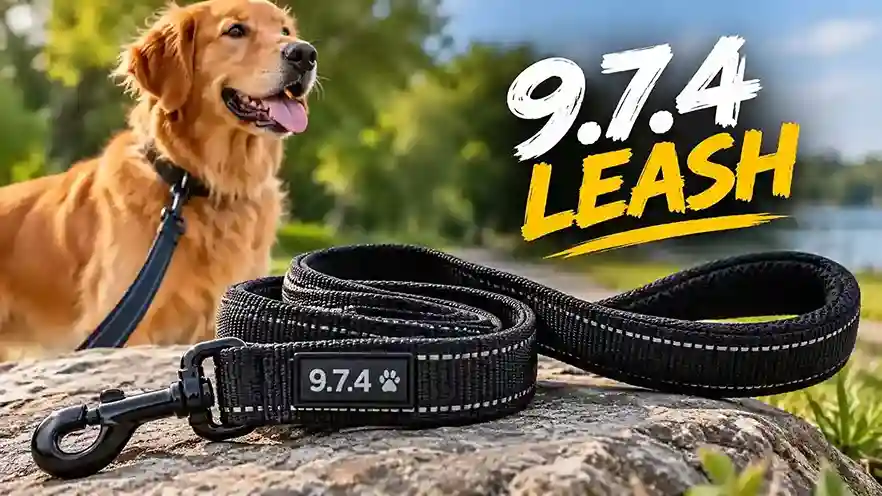
Every dog owner knows the moment: your dog spots a squirrel, the line snaps tight, and your shoulder pays for it.Although a leash appears to be the most basic piece of equipment you will ever purchase, it determines your level of control, your dog’s comfort level, and your safety in close proximity to traffic.
That is why so many shoppers are now searching for a 9.7.4 leash. This guide explains what the term means, which materials hold up, how to match length to your route, how this style stacks up against other options, and which recent design changes are actually worth paying for.
What Does “9.7.4 Leash” Actually Mean?
Let’s be upfront about something most listings skip. There is no official industry standard called “9.7.4.” Shoppers use the phrase as shorthand for a long, adjustable walking lead in roughly the nine-foot range, usually with a comfortable grab handle and a slim but strong line. Sellers then attach their own measurements to the name.
In practice, this means one thing for you as a buyer: ignore the label and read the real specifications. Check the maximum length, the handle size, the line width, the stated breaking strength, and the hardware type. A genuine 9.7.4 leash should be easy to evaluate on those numbers, and a listing that hides them is a red flag.
Why the Format Became So Popular
The appeal is straightforward. A standard lead of around six feet keeps your dog close but can feel restrictive in open areas. A very long training line gives freedom but tangles easily and is hard to manage near people. A nine-foot adjustable lead sits between the two, giving you a flexible middle ground without needing to carry several leashes.
Who Benefits Most
Owners who walk a mix of environments gain the most. If your day includes a busy pavement, a quiet park, and an occasional trail, one adjustable lead that can be shortened or lengthened covers all of it. Trainers also like it because it supports recall practice and loose-leash walking without switching equipment.
Best Materials for a 9.7.4 Leash
The material controls weight, grip, durability, and how much cleaning you will do. Each option suits a different type of owner.
Nylon: The Practical All-Rounder
Nylon webbing is light, affordable, and available in countless colors. Double-layer or tightly woven versions resist fraying well, which matters on rough ground. The downside is that wet nylon holds odor and can cause friction burns if it slides quickly through a bare hand.
Biothane: Built for Mud and Water
Biothane is a coated webbing that wipes clean in seconds and does not soak up water. It suits owners who walk near lakes, beaches, or muddy fields.In cold or damp conditions, it maintains its shape and is hygienic, but it feels a little stiffer than fabric.
Leather: Comfort That Improves With Age
Leather softens in the hand and looks good for years when conditioned. It costs more and needs regular care, but many owners prefer the feel. It is a solid choice for calm walkers and for people with sensitive hands.
Rope and Paracord: Strength for Strong Pullers
Round rope-style leads are flexible and tough, which suits energetic or powerful dogs. They can feel thick in the hand, so a padded handle makes a real difference. They are also heavier than thin nylon, which may not suit very small dogs.
How Long Should Your 9.7.4 Leash Be for Different Walks?
Adjustability is the main benefit of this style, but only if the length is deliberately chosen. A line that is too long in the wrong place creates tangles and trip hazards.
Busy Streets and Crowded Areas
Shorten the lead so your dog stays near your side. A short, controlled hold keeps your dog away from cyclists, scooters, and passing vehicles. This is where a secondary grab handle near the clip earns its place.
Parks, Fields, and Quiet Trails
Open spaces are where the full length shines. The extra slack lets your dog sniff, explore, and move naturally while you keep a secure connection. Dogs that get to investigate on walks often return calmer, because they have used their nose as well as their legs.
Training Sessions
Mid-length settings work well for practicing recall and loose-leash walking. You have enough line to let your dog make choices, and short enough control to guide a correction before bad habits form. Keep the line gathered neatly in one hand so it never drags underfoot.
Safety Features to Look For in a 9.7.4 Leash
A pretty leash that fails under pressure is worse than no leash at all. These are the features that deserve your attention before price or color.
Hardware That Does Not Give Way
The clip is the most common failure point. Look for solid metal hardware, such as stainless steel or a strong alloy, with smooth movement and no wobble. A locking carabiner-style clip is a sensible upgrade for dogs that lunge, because it will not pop open under sudden strain.
Reinforced Stitching
Check where the handle loop and the clip attach. Box-style or multiple-row stitching spreads the load and resists tearing. Thin single-line stitching at these points is where cheap leashes tend to fail first.
A Comfortable, Padded Handle
A padded or neoprene-lined handle protects your palm when your dog pulls. Contoured handles reduce hand fatigue on long outings. If you walk a large or strong dog, a wider, softer grip will make a noticeable difference to your wrist and fingers.
Reflective Details and Visibility
Reflective thread woven into the line helps drivers notice you at dusk or before sunrise. For winter evenings, this is not a luxury. Combine it with a reflective collar or harness for the best result.
A Traffic Handle
A second short loop placed close to the clip lets you pull your dog in quickly at crossings or in tight spaces. Many owners say this single feature changes how confident they feel around vehicles.
9.7.4 Leash vs Other Leash Types: Head-to-Head Comparison
Choosing well means seeing how this style compares with the alternatives. The table below sets four popular options side by side across the factors that matter most day to day.
| Feature | 9.7.4 Leash (Adjustable, ~9 ft) | Standard Fixed Leash (4–6 ft) | Retractable Leash | Hands-Free Bungee Leash |
| Control level | High, adjustable | Very high | Low to moderate | Moderate |
| Freedom for the dog | Good | Limited | Excellent | Good |
| Best environment | Mixed: streets, parks, trails | City walks, vet visits | Wide open, low-risk areas | Jogging, hiking |
| Training suitability | Excellent | Good for heel work | Poor | Fair |
| Tangle risk | Low to moderate | Very low | Moderate to high | Low |
| Shock absorption | Depends on design | Usually none | Limited | Built in |
| Mechanical failure risk | Low | Very low | Higher (springs, housing, button) | Low |
| Ease of handling | Easy once set | Easiest | Needs practice | Easy, but less direct control |
| Overall flexibility | Very high | Moderate | Moderate | Moderate |
Reading the Results
The adjustable nine-foot lead wins on versatility. It cannot match a short fixed leash for tight control, and it cannot match a retractable model for raw range, but it avoids the biggest weaknesses of both. There is no internal spring to jam, and no sudden jerk when a retractable cord reaches its limit.
When Another Option Wins
If you walk almost exclusively on crowded city pavements, a standard six-foot lead is simpler and safer. If you run with your dog several times a week, a hands-free bungee setup makes more sense. A retractable leash only suits wide, quiet spaces with a dog that already has reliable manners, and even then it demands attention.
The Smart Combination
Many experienced owners keep two leashes: a short fixed one for busy areas and an adjustable lead for everything else. If you want only one, the adjustable option is the most forgiving.
Latest Updates and New Trends in Leash Design
Leash design has moved well beyond a plain strip of webbing. Several changes are now common across newer product ranges, and some of them are genuinely useful.
Shock-Absorbing Sections
More brands now build a stretch or bungee section into the line to soften sudden pulls. Hands-free models in particular advertise this feature, because it reduces strain on your back and on your dog’s neck or harness when a lunge happens. If your dog is a puller, this is one of the most practical upgrades available.
Convertible and Multi-Function Designs
Many newer leashes switch between a regular hold, a waist-worn hands-free setup, and a shorter control mode, using adjustable rings or sliding buckles. This suits owners who want one product for walks, runs, and errands. It also matches the logic of a 9.7.4 leash, which is built around flexibility.
Better Night Visibility
Reflective stitching is now close to standard on mid-range leads, and some products add built-in lights or glow elements. If your walks happen in the dark, these additions are worth prioritizing over cosmetic features.
Easier-to-Clean Fabrics
Wipe-clean coated materials and quick-dry webbing have become more common, reflecting how many owners walk in wet or muddy conditions. Less washing means less wear on the line and fewer hygiene problems.
A Note on Marketing
New does not always mean better. A few products add features that look impressive but do not improve safety, such as decorative extras or unproven “smart” claims. Judge every upgrade by one question: does it improve control, comfort, or visibility? If not, skip it.
Which Dogs Suit a 9.7.4 Leash Best?
Fit depends on your dog’s size, energy, and training level.
High-Energy and Working Breeds
Dogs such as collies, shepherds, and similar active types do well with extra range, because it lets them move naturally on walks. A longer line also helps burn mental energy through sniffing and exploring.
Large and Powerful Dogs
Big dogs need strong hardware, wide webbing, and well-reinforced handles. Choose a lead rated well above your dog’s likely pulling force, and use a well-fitted harness if your dog pulls hard, since pressure on the neck should be avoided.
Small and Flat-Faced Dogs
Light lines are kinder to small necks and to breeds that struggle with breathing. A thin, lightweight option paired with a comfortable harness is usually the better setup. Avoid heavy chain or thick rope on these dogs.
Puppies, Rescues, and Recovering Dogs
Young puppies often start better on a short, light lead while they learn basics. Because you can start close and lengthen the line as trust grows, the customizable format is beneficial for rescue pets with unknown histories. Dogs recovering from injury need controlled movement, which the mid-length setting provides.
Common Mistakes When Choosing a Leash
Most bad purchases come from a handful of repeated errors.
The first is choosing by appearance. A leash with an attractive pattern but a weak clip will fail at the worst moment. The second is ignoring your dog’s weight and strength, which leads to snapped lines or bent hardware. The third is buying more length than your routine needs. A nine-foot lead is wonderful in open space but awkward on a narrow, crowded street unless you shorten it properly.
Another common mistake is using the leash with a poorly fitted collar. A leash is only as safe as the equipment it connects to, so make sure the collar or harness fits snugly and shows no sign of wear. Finally, many owners never inspect their leash. Check the stitching, clip, and line regularly, and replace anything that looks frayed or loose.
Cleaning and Maintenance Tips
A well-kept leash lasts longer and stays safer.
Wash nylon and rope in warm, soapy water, then air dry away from direct heat. Use an old toothbrush on the clip to remove grit that can cause corrosion. Wipe coated materials with a damp cloth after muddy walks, and avoid harsh chemicals that might damage the surface. Condition leather every few months with a product made for pet gear, and store it flat in a cool, dry place.
Make inspection part of your routine. Look for fraying near the handle, rust or stiffness in the clip, and any stitching that has started to lift. A small problem found early costs nothing; the same problem found mid-walk can be dangerous.
How Much Should You Spend?
Price usually tracks material and hardware quality, though the most expensive option is not always the best match.
Budget leads are fine for small, calm dogs and light use, but expect shorter lifespans. Mid-range options often add padded handles, reflective thread, and stronger clips, and this tier gives most owners the best balance. Premium leather or coated webbing costs more upfront but can last for years with proper care, which often makes it cheaper over time than replacing weaker leashes repeatedly.
Prices vary by region and brand, so compare current listings rather than relying on any fixed number. Judge value by durability and safety features, not by the sticker alone.
Where to Buy a Reliable Leash
Pet specialty stores let you handle the leash, test the clip, and judge the handle in your own hand, which is valuable for something you will hold every day. Large online marketplaces offer wider choice and customer reviews that reveal how products hold up after months of real use. Look for reviews that mention durability and clip performance rather than only appearance.
Independent trainers and small makers often sell well-built, handcrafted leads with better hardware than mass-market versions. Whichever route you pick, confirm the actual measurements and the return policy before paying, particularly since the “9.7.4” label has no fixed definition.
Final Verdict: Is a 9.7.4 Leash Worth Buying?
For most owners who walk in varied environments, yes. A nine-foot adjustable lead offers a practical balance of control and freedom that a short fixed leash and a retractable model cannot deliver together. It is easy to train with, simple to handle, and free of the spring mechanisms that cause trouble in retractable designs.
Choose strong hardware, reinforced stitching, a padded handle, and reflective detail. Set the length to fit each route, check the leash frequently, and match the material to your climate and your dog’s strength. If you jog often, consider a hands-free shock-absorbing model alongside it.
Get those basics right, and your 9.7.4 leash becomes more than a piece of gear. It becomes the quiet connection that makes every walk safer, calmer, and more enjoyable for both of you.
